

A dew-point or humidity reading is only as trustworthy as the last time the instrument was checked against a known reference. On Pakistani compressed-air headers, natural-gas sample points, dryer outlets, and process moisture loops, that check is often overdue—or limited to a quick “bump” that confirms the display moves, not that the scale is correct.
This note explains why field and laboratory calibration matter for moisture instruments, how bump checks differ from full calibration, and which calibrator classes from the Tetracon catalogue (HygroGen2, OptiCal, and DCS dew-point systems) fit plant workshops and metrology labs. It is written for instrumentation, reliability, and QA teams who must defend numbers to auditors, licensors, and operations.
Why calibration discipline pays
Moisture instruments drift. Ceramic and polymer sensors age with contamination; chilled-mirror optics foul; sampling lines hold residual water after a wet event. Without periodic comparison to a controlled humidity or dew-point source:
- Dryer setpoints look “fine” while product or instrument air is still wet.
- Natural-gas water dew-point reports disagree between portable survey kits and online transmitters.
- Turnaround decisions (regenerate, replace, quarantine) rest on untraceable data.
- ISO, pharma, and corporate quality systems reject undocumented checks.
Calibration does not make a bad sample system good—but it stops you trusting a wrong number from a good system.
Bump check vs full calibration
| Activity | What it proves | When it is enough |
|---|---|---|
| Bump / functional check | Sensor responds to a wet or dry challenge; alarms/relays act | Daily/shift confidence; after battery change; before a short survey |
| Single-point verification | Agreement at one known humidity or dew point within tolerance | Mid-interval check on a stable transmitter |
| Multi-point calibration | Scale linearity across the working range vs a reference | Scheduled calibration; after sensor replacement; before custody or release-critical work |
| System qualification | Instrument + sample system + procedure as used on site | Critical air/gas quality loops; regulated environments |
Bump checks are necessary; they are not a substitute for multi-point calibration against a traceable reference. Document both—and quarantine any device that fails either.
What Pakistan plant labs typically need
Workshops supporting fertilizer, refining, power, textiles, pharma utilities, and gas processing usually need a mix of:
- Portable RH/T probe calibrators for humidity transmitters and handhelds used on HVAC, clean utilities, and ambient checks.
- Benchtop optical / chilled-mirror referenced calibrators when national-standard–style traceability is required without shipping every probe abroad.
- Integrated dew-point calibration stations for low dew-point sensors used on compressed air, natural gas, and process gases (often far drier than ambient RH chambers can reach).
Match the calibrator range to the instruments under test. An RH chamber that bottoms out near a few percent RH will not stress a −40 °C or −70 °C dew-point transmitter used on instrument air.
Calibrator classes in the Tetracon catalogue
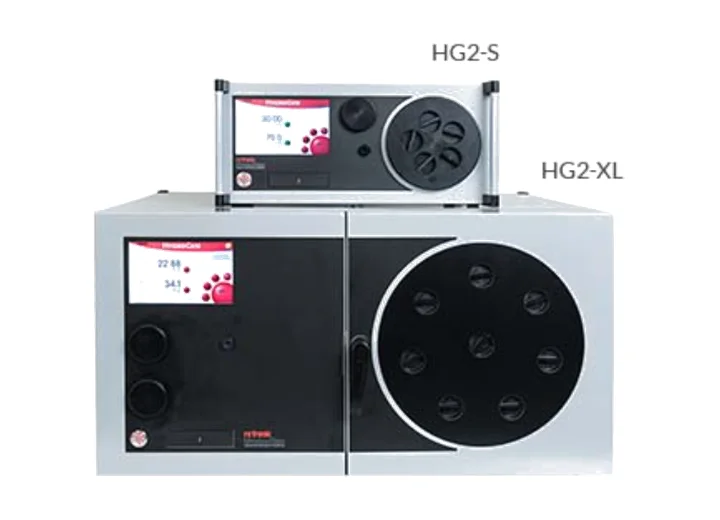
HygroGen2 humidity & temperature calibrator
The HygroGen2 (HG2-S / HG2-XL) generates stable humidity and temperature setpoints so probes from multiple brands can be calibrated together. Typical strengths for Pakistani workshops:
- On-site or in-lab use—bring the chamber to the transmitter bank when removal is costly.
- Programmable multi-step sequences and optional automation to cut operator time.
- Useful for pharmaceutical, food, and HVAC humidity loops as well as general plant RH transmitters.
Use HygroGen2-class tools when your fleet is mainly %RH / temperature probes and you need repeatable chamber conditions—not ultra-dry dew-point generation.
Optical humidity & temperature calibrator (OptiCal class)
The Michell OptiCal pairs a controlled chamber with a built-in chilled-mirror reference. That architecture supports calibrations with clearer metrological pedigree: the probes under test are compared to an optical dew-point reference in the same environment.
- Good fit when QA asks “traceable to what?”
- Multi-probe capacity reduces queue time on large humidity transmitter fleets.
- Transportable enough for on-site campaigns at major plants.
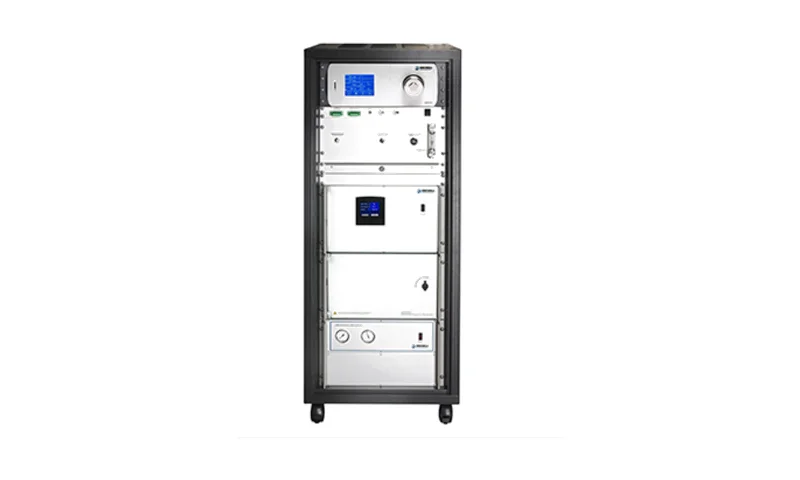
DCS dew-point calibration system
Where instruments read frost/dew point far below ambient—compressed air dryers, natural-gas moisture, specialty gases—you need a DCS-class dew-point calibration system. These rack stations combine drying, generation, and a reference path so technicians can step through dry setpoints and verify transmitters or portable hygrometers across their working range.
Specify the operating span to match your fleet (for example dry instrument-air transmitters versus near-ambient process RH). Built-to-order configurations keep the station sized to real plant needs rather than unused extremes.
Instruments you are usually verifying
Calibration programmes in Pakistan commonly cover portable and online hygrometers such as the Michell Easidew Portable and MDM300 portable hygrometer, plus fixed Easidew-class transmitters on critical headers. Treat the portable as a transfer standard only if it itself is within calibration—otherwise survey campaigns quietly propagate error from plant to plant.
Practical tips for Pakistani plant workshops
- Write the range — Calibrate across the span you actually use (for example −60 to −20 °C frost point for dryer outlets), not only a convenient mid-scale point.
- Control the sample path — Use dry tubing, adequate purge time, and documented flow. A wet hose will fail a good sensor every time.
- Separate ambient RH from process dew point — Do not judge a −40 °C transmitter with a room-air RH check alone.
- Record as-found / as-left — Auditors care about drift history, not only a pass sticker.
- Mind environment — Dust, monsoon humidity, and unstable workshop temperature lengthen stabilization; give chambers and mirrors time to settle.
- Train ownership — One named custodian for calibrators, reference certificates, and quarantine tags beats a shared drawer of “maybe OK” portables.
- Plan logistics — Keep a rotating spare portable so production surveys continue while units are on the bench.
Building a sensible programme
- Inventory every moisture/humidity transmitter and portable with range, location, and criticality.
- Set intervals by risk (custody, product quality, SIS-adjacent air) rather than one calendar for everything.
- Define pass/fail tolerances in engineering units before the first run.
- Store certificates with instrument IDs; link them to CMMS work orders.
- Re-verify after sensor swaps, major contamination events, or unexplained process disagreements.
How Tetracon supports calibration choices
Tetracon supplies humidity and dew-point calibration equipment alongside the hygrometers those systems verify, and can help match chamber or DCS span to your fleet through the contact page and services team. For product details, start with HygroGen2, OptiCal, and DCS on the catalogue.
Key takeaways
Field and lab calibration turn moisture readings into defendable data. Use bump checks for daily confidence, multi-point calibration against HygroGen2 / OptiCal / DCS-class references for scale accuracy, and match the calibrator technology to whether you work in %RH or deep dew point. Pakistani plants that document as-found/as-left results, control sampling, and quarantine failures spend less time arguing about dryer performance—and more time fixing the real process issue.