

Portable dew-point hygrometers earn their keep in two very different Pakistan plant contexts: compressed-air quality on manufacturing, pharma, and utility rings, and SF6 moisture checks on high-voltage switchgear at power stations and grid substations. The physics is the same—measure how dry a gas is—but the sampling practice, safety constraints, and acceptance limits differ.
This guide helps maintenance, HSE, and electrical teams choose a portable instrument that matches the job without overspending on laboratory features they will never use—or underspecifying a meter that cannot reach the dew points their dryers or GIS compartments actually require.
Why portable measurement still matters when you already have online transmitters
Many plants install fixed dew-point transmitters on dryer outlets. That is good practice. Portable meters remain essential because they:
- Verify whether the online transmitter still agrees with reality after filter changes or monsoon humidity spikes.
- Check branch lines and points of use that online sensors never see.
- Confirm dryer performance after regenerant failure, valve leakage, or desiccant ageing.
- Support SF6 compartment inspections where a permanent analyzer is rarely fitted.
- Provide auditable spot-check records for ISO 8573 compressed-air quality programmes and electrical maintenance procedures.
Think of online instruments as continuous guardians and portables as the cross-check and troubleshooting tool.
Compressed air: what dew point number you are chasing
Compressed-air moisture is usually discussed as pressure dew point—the dew point of the air at line pressure—not the atmospheric dew point after expansion. Confusing the two can make a dryer look better or worse than it is.
ISO 8573-1 classifies compressed air by particles, water, and oil. Water classes commonly referenced in industry practice include targets around:
- Refrigerated dryer territory: pressure dew points near +3 °C to +10 °C (typical Class 4–6 water ranges, depending on exact class tables used).
- Desiccant dryer territory: often −40 °C pressure dew point for general dry air, and −70 °C for more demanding duties such as certain pharma, electronics, or instrument-air specs.
Always map your internal specification to the ISO class you claim in SOPs. Pharmaceutical and food plants in Pakistan increasingly treat compressed air as a process utility that must be validated—not an afterthought behind the compressor shed.
Failure modes when air is too wet:
- Corrosion inside actuators, cylinders, and instrument tubing.
- Sticky pneumatic valves and false trips.
- Microbial risk where condensate sits in low points.
- Freeze-outs on outdoor lines in winter highland sites.
- Paint, powder, and packaging defects in manufacturing.
SF6 switchgear: why moisture is a dielectric and corrosion problem
SF6 is used as an insulating and arc-quenching medium in GIS and circuit breakers. Moisture ingress through seals, desorption from internal surfaces, or improper filling can raise humidity inside the compartment. In the presence of arcing by-products, water contributes to formation of corrosive compounds (including HF and related species) that attack internals and reduce dielectric strength.
Utilities therefore specify moisture limits for SF6 compartments—often as dew point/frost point at compartment pressure or as ppmv/ppmw. Portable hygrometers used on SF6 must:
- Cope with the sample gas and fittings used on that OEM’s fill/test ports.
- Minimise SF6 vented to atmosphere (regulatory and cost pressure).
- Remain accurate at low frost points typical of healthy compartments.
- Prefer intrinsically safe or appropriately certified tools when used in classified outdoor switchyards—follow the site’s electrical safety rules.
Some specialist SF6 analyzers combine humidity, purity, and optional SO2 with gas recovery. A general-purpose portable dew-point hygrometer can still be the right tool for many moisture-only spot checks if sampling is done carefully.
Instrument types you will actually see on a quote
Ceramic / metal-oxide portable hygrometers
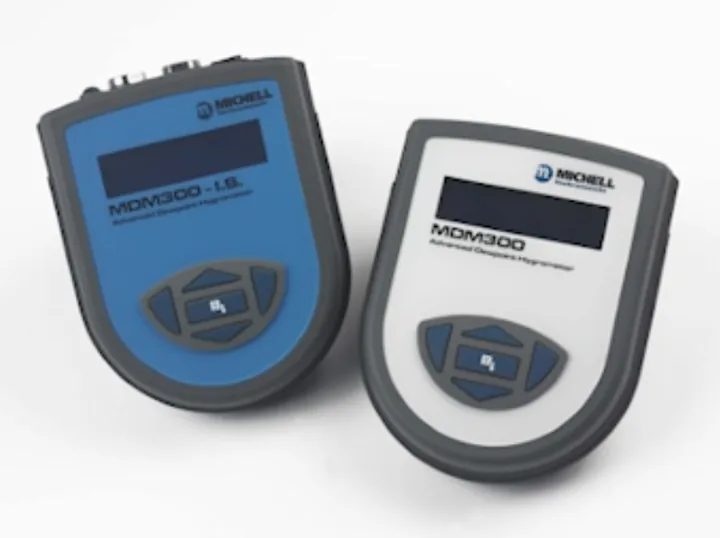
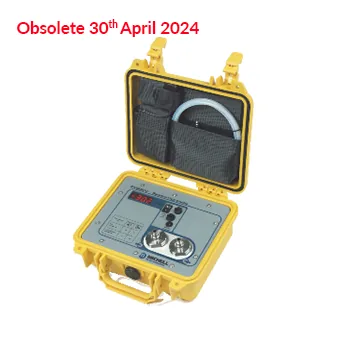
Fast, rugged, and widely used for compressed air and many process gases. Michell’s MDM300 series portable dew-point hygrometer is built for rapid spot checks, including hazardous-area I.S. variants, with measurement units that cover dew point and derived moisture content for air, N₂, H₂, CO₂, SF6, and natural gas. For teams that need a lighter dryer-focused tool, the Easidew Portable and Easidew PDP Dryer Portable sit in the same family of practical field instruments.
Strengths: speed, portability, multi-gas unit conversion, industrial robustness.
Limitations: like all impedance sensors, they need dry-down time from wet exposure and benefit from regular calibration against a reference.
Chilled-mirror portables / transportables
Fundamental condensation measurement—excellent as a reference, typically heavier and slower for a long list of daily plant rounds. Often reserved for lab or high-accuracy audits rather than every dryer bay visit.
Fixed transmitters vs portables (know when to buy both)
If a critical dryer feeds instrument air for a SIS or a pharma process, a permanently installed transmitter such as the SF82 dew-point transmitter for compressed air dryers provides continuous alarms. The portable meter then becomes the verification device—not the only line of defence.
Selection checklist (use this before you buy)
- Range — Can the meter read your driest expected point with margin? A −40 °C dryer check needs a different capability than a refrigerated dryer at +3 °C.
- Pressure rating — Will you measure at line pressure or after a regulated sample? MDM300-class instruments can work at high process pressures when correctly connected; always stay within the datasheet limit.
- Hazardous area — Compressor houses, natural-gas sites, and some outdoor switchyards may require ATEX/IECEx I.S. tools.
- Response time — How many points must a technician cover per shift? Fast T95 to low dew points matters more than brochure accuracy alone.
- Sampling accessories — Filters, quick-connects, flow meters, and SF6 adapters decide whether readings are trustworthy.
- Units and logging — Need °C dew point, ppmv, ppmw for SF6, or g/m³? Need time-stamped logs for audits?
- Calibration path — Who recalibrates in Pakistan, and how often? Prefer OEM-traceable certificates and a clear turnaround plan.
- Battery and IP rating — Outdoor substation work in heat and dust is unforgiving.
Browse manufacturer options under Michell Instruments on Tetracon’s site and pull datasheets from the downloads centre when comparing models.
Sampling technique: where most field errors come from
Compressed air
- Sample from a vertical take-off where possible; avoid liquid-logged bottom taps.
- Use a short, clean stainless or PTFE sample line dedicated to dew-point work.
- Set a stable low flow; do not blast the sensor with full line flow.
- Allow the reading to stabilise—especially when moving from a wet point to a dry dryer outlet.
- Record line pressure with the dew point so pressure dew point is unambiguous.
- Never open the sensor to monsoon-humid ambient air between points without a dry storage/purge plan.
SF6 compartments
- Follow the OEM filling/testing procedure and site SF6 handling rules.
- Use correct DN/valve adapters; leaks destroy both accuracy and inventory.
- Prefer methods that minimise venting; recover gas where procedures require it.
- Convert units correctly (dew/frost point at compartment pressure vs ppm).
- Do not treat a single rushed reading as definitive—confirm stability and leak-free connections.
A practical field workflow
- Confirm the acceptance limit in writing (SOP, OEM manual, or ISO class).
- Inspect filters and sample hardware before connecting.
- Connect, set flow, wait for stability, log reading + pressure + ambient + point ID.
- If the dryer outlet fails, check prefilter drains, regenerant, purge valves, and bypass leakage before condemning desiccant.
- If SF6 moisture is high, investigate recent topping-up, seal integrity, and whether the compartment was opened—coordinate with the electrical maintenance owner.
- Cross-check any surprising result with a second point or a second instrument before major maintenance decisions.
Pakistan-specific operating notes
- Monsoon and coastal humidity (Karachi, and humid plains sites) make ambient contamination of open sensors a real issue—keep desiccant storage caps on.
- Dust and heat favour IP-rated cases and shaded work, not dashboard-of-the-pickup storage.
- Power-plant outages and grid maintenance windows are short—choose instruments with fast dry-down so more bays can be tested per outage.
- Pharma and food auditors increasingly ask for compressed-air dew-point evidence; keep portable logs with instrument serial numbers and calibration dates.
Tetracon, as Michell’s sole authorized agent in Pakistan, can help match portable versus online dew-point hardware to these site realities without forcing a one-size catalogue choice.
Common procurement mistakes
- Buying on “lowest dew point in the brochure” without checking response time and accessories.
- Assuming atmospheric dew point equals pressure dew point.
- Omitting hazardous-area certification for classified compressor rooms.
- No budget for calibration or spare sintered filters.
- Using an SF6 moisture reading taken with wet sample hoses left open in the store.
Key takeaways
A portable dew-point hygrometer is a verification and troubleshooting instrument for compressed-air quality programmes and SF6 moisture control. Specify range, pressure capability, certification, sampling kit, and calibration support first; model marketing second. Pair portables with online dryer transmitters on critical utilities. Measure carefully—sampling technique usually dominates the datasheet’s accuracy line.
When your next maintenance window includes dryer bays and GIS checks, arrive with a meter that can finish the round, log the evidence, and survive the climate—not one that only looks good in a laboratory photo.