

Pakistan’s waste-to-energy (WtE), anaerobic digestion (AD), and landfill-gas projects succeed or fail on gas quality data. Methane drives energy yield; oxygen and nitrogen signal air ingress; carbon dioxide and balance gases shape engine and flare setpoints; hydrogen sulfide threatens people, catalysts, and engines. Guessing composition from a single occasional reading is how plants discover problems as downtime, odor complaints, or near-misses.
This technical note is for municipal, industrial, and environmental engineers plus HSE teams specifying or operating biogas and landfill-gas monitoring. It maps typical measurement duties to catalogue instruments—the fixed QED BIOGAS 3000 and the portable QED GEM PRO—and lists practical sampling and programme tips for Pakistani sites.
Why composition matters on AD, landfill, and WtE sites
Biogas and landfill gas are not “natural gas with a different name.” Moisture, H2S, siloxanes (on some feeds), and highly variable CH4/CO2 ratios change with feedstock, weather, well-field balance, and digester health. Continuous or regular multi-gas data supports:
- Energy & commercial decisions — CH4% and flow determine what an engine, boiler, or offtaker can accept.
- Process control — Digester health, leachate/gas well balancing, and cover integrity show up first as composition shifts.
- Safety — O2 ingress raises explosion risk in confined extraction systems; toxic H2S and asphyxiant CO2/CH4-rich atmospheres need documented monitoring near wells, manifolds, and plant rooms.
- Environmental compliance — Flare/engine destruction efficiency and fugitive emissions programmes need defendable CH4 and balance readings, not anecdote.
A methane number without oxygen and balance context is incomplete—air leaks and dilution hide behind “low CH4” just as often as poor biology.
Typical monitoring duties in Pakistan
| Duty | What you need | Usual pattern |
|---|---|---|
| Digester / gas holder outlet | CH4, CO2, O2 (often H2S) | Fixed continuous analyzer near the process; local display + 4–20 mA / Modbus to SCADA |
| Landfill well-field & header surveys | CH4, CO2, O2, balance; pressure/flow notes | Portable multi-gas analyzer with structured well routes and as-found logs |
| Engine / flare feed quality | CH4 stability, O2 max, H2S limits per OEM | Fixed on critical feed; portable for troubleshooting and contractor verification |
| Confined spaces & plant rooms | Personal / area toxic & LEL protection | Separate HSE gas-detection programme (fixed heads + portables)—complement, do not replace process analyzers |
Separate process gas quality instruments from personal/area HSE detectors. Both matter; using a bump-tested personal detector as your only digester CH4 meter is a common and costly shortcut.
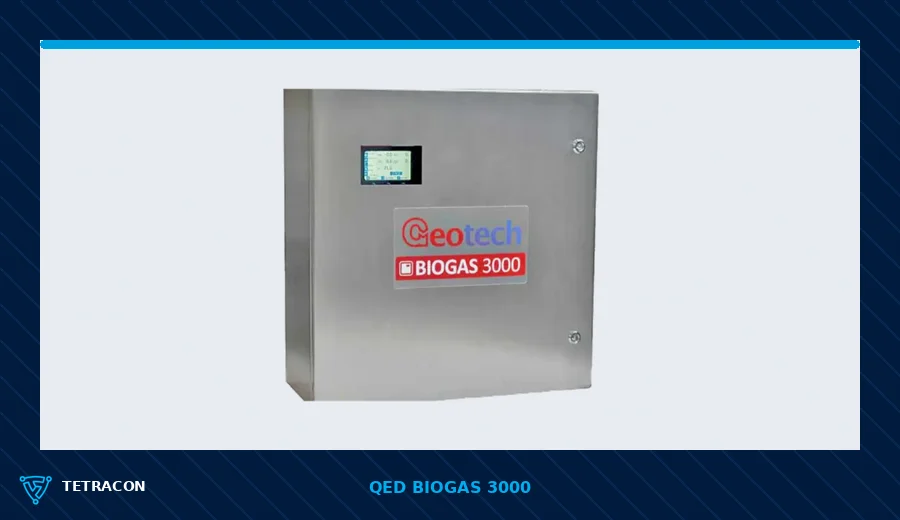
Fixed monitoring: BIOGAS 3000 class
The BIOGAS 3000 is aimed at continuous, hazardous-area–conscious monitoring of digester, gas-holder, and similar process streams. For Pakistani AD and WtE plants, fixed analyzers typically earn their keep when:
- Engine or flare OEMs impose CH4 / O2 / H2S windows that operations must prove in real time.
- Operators need trends (not single snapshots) after feedstock changes, monsoon effects on landfill gas, or digester upsets.
- SCADA/DCS must alarm on O2 ingress or CH4 collapse before a shift walks the plant.
Specify sample conditioning (moisture, particulates, condensate knock-out), ATEX/zone requirements, and output protocols early—retrofitting tubing and power on a live digester roof is far costlier than getting the P&ID right once.
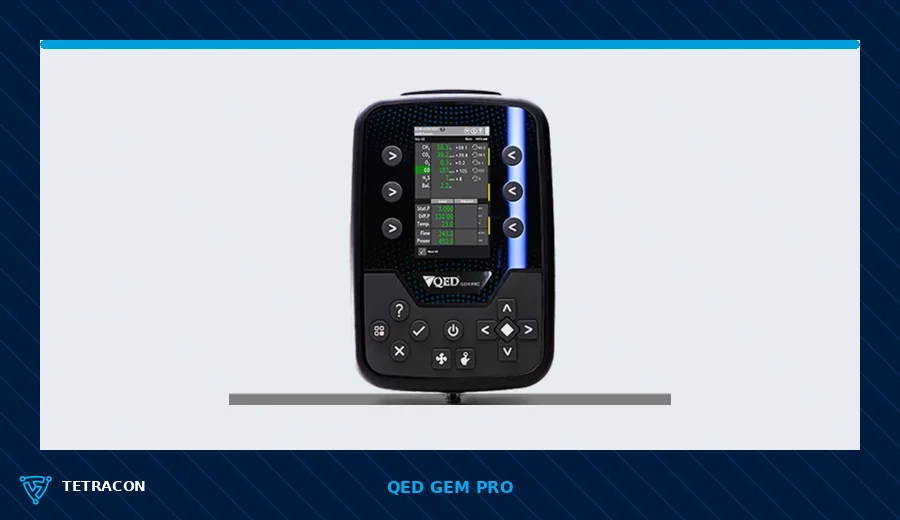
Portable surveys: GEM PRO class
Landfill well fields and multi-digester campuses need route-based measurements. The GEM PRO class of portable landfill/biogas analyzers supports structured surveys: well ID, CH4/CO2/O2, and operational notes that feed balancing decisions. Typical Pakistani use cases:
- Weekly/monthly well-field balancing and cover-integrity checks.
- Commissioning and contractor handover verification before engines go on gas.
- Troubleshooting a fixed analyzer disagreement (confirm whether the process or the online instrument changed).
Treat the portable as a transfer standard only if it is within calibration and the operator follows a written purge and settle procedure. A wet sample line or rushed reading will invent “air ingress” that is really tubing.
H2S and sulfur — measure with intent
Hydrogen sulfide is both a toxic hazard and a poison for engines and polishing systems. Many biogas packages include H2S channels on the process analyzer; for dedicated sulfur / H2S duties, plants also evaluate specialized analyzers such as Galvanic Applied Sciences ProTech / GPR-7500–class instruments where continuous sulfur measurement is critical. Match range (ppm vs percent), sample system materials, and alarm philosophy to the real gas—not a catalogue default. Personal H2S monitors remain mandatory for people entry; they do not replace process H2S trending on the gas train.
Practical tips for Pakistani AD / landfill / WtE sites
- Write the duty — Continuous process quality vs survey vs personal protection. Buy and procedure for each separately.
- Control the sample path — Short, drained lines; heated or insulated runs where condensate forms; documented purge times before logging a number.
- Calibrate and bump on a schedule — Zero/span gases appropriate to CH4/CO2/O2/H2S ranges; quarantine instruments that fail.
- Log well and digester IDs — Composition without location and valve state is not actionable for balancing.
- Watch monsoon and temperature — Landfill gas quality and condensate loads swing with weather; expect more portable surveys after heavy rain.
- Align with engine OEM limits — CH4 floor, O2 ceiling, and H2S caps belong in the monitoring SOP, not only in a vendor PDF.
- Train named owners — One custodian for fixed analyzers and one for the portable fleet beats a shared cabinet of “maybe calibrated” kits.
Building a sensible programme
- Inventory every digester outlet, header, flare/engine feed, and landfill sector with required gases and criticality.
- Put fixed BIOGAS 3000–class monitoring on streams where downtime or safety consequence is high.
- Run GEM PRO–class routes on a calendar with as-found/as-left and well balancing actions closed in CMMS or equivalent.
- Keep HSE area/personal detection as a parallel programme with its own bump-test logs.
- Review trends after feedstock changes, wellfield work, and seasonal weather shifts.
How Tetracon supports biogas & landfill monitoring choices
Tetracon supplies biogas and landfill-gas analyzers alongside complementary gas detection and analysis instruments. Application support through the contact page and services team can help match fixed vs portable duty, sample systems, and hazardous-area needs. Start with the catalogue pages for BIOGAS 3000 and GEM PRO.
Key takeaways
Biogas and landfill-gas projects in Pakistan need disciplined multi-gas data—CH4, CO2, O2, and H2S where relevant—not occasional single-point guesses. Use fixed BIOGAS 3000–class analyzers for continuous process and engine-feed quality; use GEM PRO–class portables for well-field and survey work; keep personal/area HSE detection as its own programme. Sites that document sampling, calibration, and well/digester IDs spend less time arguing about “bad gas” and more time fixing digesters, covers, and headers.