

Gas detection is not one product category—it is a layered control. Pakistani refineries, fertilizer plants, power stations, pharmaceutical utilities, and manufacturing sites typically need both fixed detectors for continuous area protection and portable instruments for permits, confined-space entry, and leak hunting. Treating either layer as optional is how organisations end up with impressive cabinets and weak fieldwork—or busy bump-test logs and blind spots in compressor buildings.
This article compares fixed and portable gas detection from an HSE and engineering perspective, with practical notes for Pakistan’s regulatory and operating context.
What each layer is designed to do
Fixed gas detection
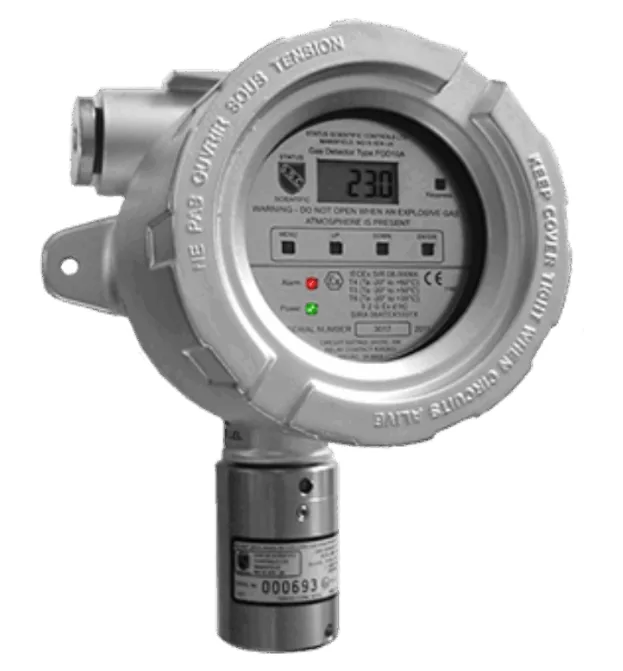
Fixed systems watch defined locations around the clock. Typical roles:
- Detect flammable gas releases near compressors, tank farms, loading bays, and gas turbine packages.
- Monitor toxic gases (H₂S, CO, NH₃, Cl₂, etc.) at process units and storage.
- Track oxygen deficiency or enrichment near nitrogen systems, confined process rooms, and inerting skids.
- Alarm locally and in the control room; initiate ventilation, shutdown, or deluge logic where the safety case requires it.
Examples of industrial fixed heads used in hazardous areas include Status Scientific’s FGD14 fixed gas detector, flameproof FGD10B, and infrared FGD56 for hydrocarbon applications where catalytic beads may be poisoned or inert atmospheres defeat pellistors.
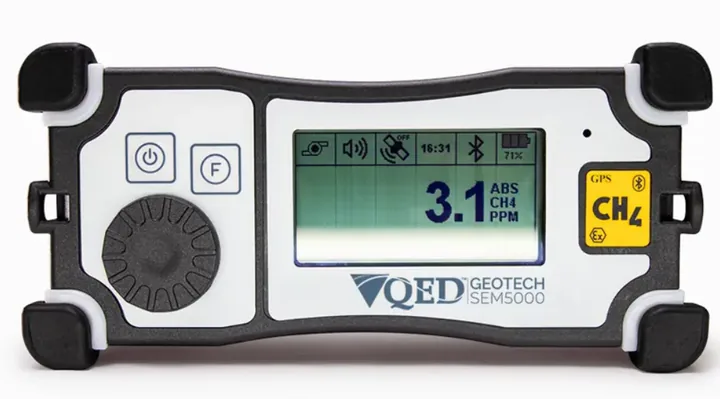
Portable gas detection
Portables travel with people and tasks:
- Confined-space entry (tanks, vessels, pits, sewers, ductwork).
- Hot-work permits and leak surveys.
- First-response checks after an odour or pressure alarm.
- Contractor work in areas without dense fixed coverage.
- Verification after maintenance when flanges have been broken.
Portables do not replace fixed coverage on a continuously occupied hazardous process area. They extend detection to mobile work and spaces that fixed heads cannot economically cover.
Pakistan HSE and engineering context
Provincial occupational safety frameworks (including Sindh OSH rules and related factory practice elsewhere) expect employers to control exposure to injurious gases, fumes, and explosive atmospheres. In parallel, oil & gas and power operators usually align gas detection design with international practice such as IEC 60079 area classification and detector application guidance (for example the user-oriented parts of the IEC/EN 60079-29 series for flammable gas detection).
In practical plant language that means:
- Classify areas (Zone 0/1/2 or equivalent) before selecting Ex certificates.
- Choose sensor technology that matches the gas and background atmosphere.
- Set alarm levels with documented basis (often fractions of LEL for flammables; occupational exposure limits for toxics; ~19.5% / ~23.5% vol style bands for oxygen deficiency/enrichment—confirm against your corporate standard).
- Prove the system works: bump tests, calibrations, function tests of horns/beacons and shutdown outputs.
- Train users so a portable in “alarm” triggers evacuation or control actions—not button-mashing to silence it.
Technology choices that drive success or failure
| Sensor type | Best for | Weaknesses |
|---|---|---|
| Catalytic bead (pellistor) | LEL hydrocarbons in air | Poisoning by silicones/sulphur; needs oxygen |
| NDIR (infrared) | Hydrocarbons, some CO₂; works in low O₂ | Different response factors per gas; humidity/optics care |
| Electrochemical | O₂, CO, H₂S, SO₂, NH₃, Cl₂, etc. | Finite life; temperature/humidity effects; cross-sensitivities |
| PID | VOCs at low ppm | Broad response; not gas-specific without context |
| Semiconductor / others | Niche OEM uses | Often less selective—vet carefully |
Infrared fixed detectors such as the FGD56 are often preferred where catalytic sensors would be unreliable—poisoning risk, inert backgrounds, or long-term stability needs. Electrochemical cells remain the workhorse for toxics and oxygen. Match the cartridge to the hazard, not to whatever was left in the store.
Fixed vs portable: decision matrix
| Scenario | Fixed | Portable |
|---|---|---|
| Continuously running compressor building | Essential | Backup / entry |
| Tank entry once per turnaround | Rarely enough alone | Essential |
| Truck loading bay with frequent coupling | Essential | Useful for operators |
| Temporary contractor excavation near buried gas | Limited | Essential |
| Nitrogen blanketing room / glove-box area | O₂ fixed heads | Personal O₂ for entry |
| Fence-line or public receptor concerns | Engineering study + fixed/open-path as designed | Survey tools |
Most medium-to-large sites need a hybrid programme: fixed detection on permanent hazard envelopes, portables in a managed fleet with bump-test stations and calibration gas.
Placement principles for fixed detectors
Poor placement wastes capital. Keep these rules of thumb:
- Know gas density — H₂ and CH₄ rise; heavier vapours (many solvents, some LPG blends in calm air) hug low points. Place heads where accumulation is credible, not only at convenient cable trays.
- Cover release sources — pumps, compressors, flanges, sample points, fill connections—not only the centre of the room.
- Mind ventilation — detectors in the path of dilution may never see a leak that still endangers a worker in a dead pocket.
- Avoid process abuse — direct steam, liquid splash, and radiant heat shorten sensor life.
- Integrate outputs — 4–20 mA, Modbus, and relays should land in a panel or DCS with clear alarm philosophy (alert vs actionable shutdown).
- Plan maintenance access — if a technician cannot reach the head safely, calibration will slip.
Status Scientific’s Pakistan range via Status Scientific on Tetracon includes safe-area and flameproof options so the same engineering philosophy can cover utility rooms and Zone 1 process bays.
Building a portable fleet that people actually use
Portables fail programmes when they are heavy, uncalibrated, or chronically “borrowed” without ownership. Strengthen the fleet with:
- Clear allocation (operations / HSE / contractors) and booking.
- Daily bump test before use; scheduled span calibration with certified gas.
- Sensors that match site hazards (don’t send a four-gas without H₂S into a sour unit).
- Training on peak/hold, pump vs diffusion modes, and alarm meanings.
- Spare batteries, filters, and pump tubing for monsoon-dust environments.
- Quarantine tags for instruments that fail bump test.
Confined-space procedure should require pre-entry testing at multiple depths and continuous monitoring while occupied—not a single doorway sniff.
Integration with permits, BMS, and emergency response
Fixed alarms should appear on a monitored station—not only a local LED that nobody hears over a turbine package. Define:
- Who acknowledges alarms.
- When to ventilate vs isolate vs evacuate.
- How gas detection ties to fire & gas cause-and-effect charts.
- How portable alarms are reported in the permit-to-work system.
For SIL-targeted loops, confirm the detector’s capability and proof-test intervals with instrument and safety engineers—do not assume “ATEX” equals “SIL.”
Maintenance and lifecycle costs (honest accounting)
Budget beyond purchase price:
- Calibration gas and regulators.
- Sensor cartridge replacements (electrochemical cells are consumables).
- Proof testing of horns, beacons, and shutdowns.
- Spares for flame arrestors, splash guards, and sintered filters.
- Training refreshers after turnovers.
A cheap fixed head that cannot be calibrated on site becomes expensive the first time production is held for a false trip—or worse, the first time a real leak is missed.
How local authorized support helps
Gas detection projects in Pakistan often stall on certification paperwork, spare cartridges, and commissioning into existing panels. Tetracon is the sole authorized agent in Pakistan for Status Scientific Controls and supports supply plus field assistance through its services team. For application questions or site surveys, use the contact page (Islamabad I-8 Markaz / Pakland City Center).
Implementation roadmap for HSE and procurement
- Inventory hazards by area (flammable / toxic / oxygen).
- Review area classification drawings.
- Gap-assess existing fixed coverage and portable fleet health.
- Prioritise high-occupancy and high-consequence zones for fixed upgrades.
- Standardise portable models to reduce training and spare-parts chaos.
- Write alarm setpoints and cause-and-effect into controlled documents.
- Set KPI: bump-test compliance, calibration on-time %, false-trip rate, overdue proof tests.
- Reassess after every significant process change or incident learnings.
Key takeaways
Fixed gas detection protects places; portable gas detection protects tasks and people in motion. Pakistani industrial HSE programmes need both, specified against real gases and zoning, maintained with bump tests and calibrations, and integrated into permits and control actions. Choose sensor technologies for the atmosphere you actually have—especially where catalytic beads are a poor fit—and treat commissioning and lifecycle spares as part of the safety function, not optional extras.
If your next CapEx cycle only funds one layer, fund the layer that closes your largest credible risk gap—and schedule the other layer before the next turnaround, not after the next incident review.